
Curaçao Casino Licence in the UK: What It Means
 Available in GB
Contents
A licence claim identifies an operator’s stated jurisdiction, but does not establish UKGC oversight or the site’s full regulatory status.
What “Curacao Casino” Means for UK Players
“Curaçao casino” usually means an online casino that says it is licensed in Curaçao rather than regulated by the UK Gambling Commission (UKGC). It describes the operator’s stated licensing jurisdiction: the place whose rules it says govern its gambling business. It does not, by itself, describe the site’s relationship with UK regulation.
That distinction matters because an operator’s base and the market it serves are not the same thing. A company may operate from one jurisdiction while its website is accessible to people elsewhere. For UK readers, the useful question is not only where a casino says it is licensed, but whether it is under UKGC oversight. A non-UK-regulated casino operates without that oversight.
The label can appear in different forms: “Curaçao online casino”, “casino licensed in Curaçao” or simply a reference to Curaçao in the site’s footer. These phrases point towards the same general idea, but they are not proof that every site using them has the same ownership, terms or regulatory status. The wording is a starting point for understanding how the operator presents itself, not a complete account of the arrangement.
If you’re considering a casino associated with a Curaçao licence while in the UK, check its licensing and UK availability independently. The details here offer a limited point of reference: the stated payout speed.
1. Chanze
Payout speed: 1-3 business days
Chanze lists a payout speed of 1–3 business days, giving you a stated timeframe to consider.
2. x3bet
Payout speed: 1-3 business days
x3bet lists a payout speed of 1–3 business days, giving you a stated timeframe to consider.
3. NightWin
Payout speed: 1-3 business days
NightWin lists a payout speed of 1–3 business days, giving you a stated timeframe to consider.
4. WinBeast
Payout speed: 1-3 business days
WinBeast lists a payout speed of 1–3 business days, giving you a stated timeframe to consider.
5. Revery Play
Payout speed: 1-3 business days
Revery Play lists a payout speed of 1–3 business days, giving you a stated timeframe to consider.
6. Dieselwin
Payout speed: 1-3 business days
Dieselwin lists a payout speed of 1–3 business days, giving you a stated timeframe to consider.
7. Zombillion
Payout speed: 1-3 business days
Zombillion lists a payout speed of 1–3 business days, giving you a stated timeframe to consider.
8. Britsino
Payout speed: 1-3 business days
Britsino lists a payout speed of 1–3 business days, giving you a stated timeframe to consider.
9. SpinFormula
Payout speed: 1-3 business days
SpinFormula lists a payout speed of 1–3 business days, giving you a stated timeframe to consider.
10. BeOnBet
Payout speed: 1-3 business days
BeOnBet lists a payout speed of 1–3 business days, giving you a stated timeframe to consider.
Operating jurisdiction and UK oversight
A licence from another jurisdiction and a UKGC licence are separate things. Non-UK-regulated casinos are typically licensed by jurisdictions such as Malta, Curaçao, Gibraltar or Anjouan. The fact that these places appear in the same broad category does not mean their rules or oversight are identical; it means the operator is referring to a regulator outside the UKGC system.
For a British reader, this makes “Curaçao casino” a useful shorthand, but a limited one. It can indicate that a site is presenting itself as licensed abroad. It cannot be read as another way of saying “UK-regulated”, nor does the label alone tell you how the site handles complaints, account checks or withdrawals. Those are separate matters, and the licensing phrase does not settle them.
Nor does “Curaçao” necessarily describe every part of the business. The operator, website, payment services and gambling software can involve different companies or locations. A casino’s own description may foreground one jurisdiction while leaving other parts of its operation less visible. The distinction is worth keeping in mind when you encounter a site that presents itself as an online casino from Curaçao.
Searches for Curacao online casinos UK often bring together two different ideas: casinos with a stated Curaçao connection and casinos available to people in Britain. The first is about the operator’s claimed licensing location; the second is about access from the player’s location. Neither phrase should be treated as a substitute for identifying whether UKGC oversight applies.
Why the label is not a verdict
People may use “Curaçao casino” as if it were a rating, a product category or a guarantee of particular features. It is none of those. The label does not establish that a site is better, safer, faster or more suitable than another casino. It also does not tell you what games or payment methods are available. Those details can vary from one operator to another.
Casino Licensing & Safety for UK Players
The same caution applies to phrases such as “best Curaçao online casinos”. “Best” is a judgement, not a consequence of a licensing location. Two sites that refer to the same jurisdiction may differ in how they present their terms and run their services. A shared label does not make them interchangeable.
For readers comparing an online casino with a Curaçao connection against a UK-regulated casino, the first step is to keep the categories distinct. One describes a claimed operating jurisdiction; the other describes oversight by the UK Gambling Commission. Treating them as equivalent blurs an important difference. Treating the word “Curaçao” as a full explanation creates a different problem: it can make a short label seem more informative than it is.
In practice, the phrase is best understood narrowly. It usually signals that the casino is presented as licensed outside the UK, often in Curaçao. It does not, on its own, establish that the operator is regulated by the UKGC or explain the protections that apply to a player. The wording identifies a claimed connection; the kind of oversight is a separate question.
The UK Legal Position: Operators and Players
The legal position depends on whether you are looking at the business running a casino or the person using it. A Curacao casino licence may describe the operator’s status in its home jurisdiction, but it does not replace the permission required to offer gambling to customers in Great Britain. The two questions are separate: where a company is licensed, and whether it may supply gambling services to this market.
Attention: A Curaçao licence does not meet the requirement for a UK Gambling Commission licence, regardless of where the company is based.
Under the Gambling Act 2005, the key obligation falls on operators that provide gambling services into the British market. They need a licence from the UK Gambling Commission, even if the company is based abroad and already holds authorisation elsewhere. A Curacao licence, or a licence from another foreign jurisdiction, does not by itself meet that requirement.
This means that a site’s willingness to accept a British customer should not be mistaken for evidence that it is authorised to serve Great Britain. Nor does the location of its servers or company headquarters settle the issue. The relevant point is whether the operator is supplying services to customers in the British market and holds the required UKGC licence. The rule applies to the operator, not just to companies with a physical presence in Britain.
For individual players, the position is different. UK law does not set out a general prohibition on British citizens using gambling services licensed abroad. The Gambling Act’s focus is on the businesses supplying gambling, rather than on prosecuting customers for placing bets with an overseas operator. A player using a site without a UKGC licence does not, on that basis alone, commit a criminal offence.
That distinction should not be stretched into a claim that every overseas site is lawful to operate here, or that a foreign licence gives it permission to target British customers. It also does not turn an unlicensed service into a UK-regulated one. The operator’s regulatory duty and the player’s exposure to criminal punishment are separate legal questions; the answer to one does not decide the other.
Casino Without a UK Licence: Rules and Risks
In practice, someone considering a Curacao casino needs to keep both sides of that distinction in view. The operator may hold a licence abroad, while still lacking the British authorisation required to supply services in Great Britain. At the same time, the absence of that UKGC licence does not mean that the player is committing a criminal offence simply by using the site. “Not a criminal offence for the customer” and “authorised to serve the market” are not interchangeable descriptions.
The phrase “Curacao casino license UK” can therefore obscure the central issue. A licence issued in Curacao is not a UK licence, and it does not satisfy the UKGC requirement for operators serving Great Britain. For a British reader, the jurisdiction named on a casino’s licence cannot answer whether the operator is authorised here. That is a question about the operator’s permission in the British market, not about the player’s nationality or the operator’s overseas base.
This is a narrow statement about legal responsibility, not an endorsement of overseas gambling. It does not establish that an operator will accept a complaint, pay a withdrawal, or provide the protections associated with UKGC oversight. Those practical differences depend on the regulatory arrangements applying to the site and should not be inferred from the fact that individual players are not the target of the Act.
What a Curacao Licence Does—and Does Not—Tell You
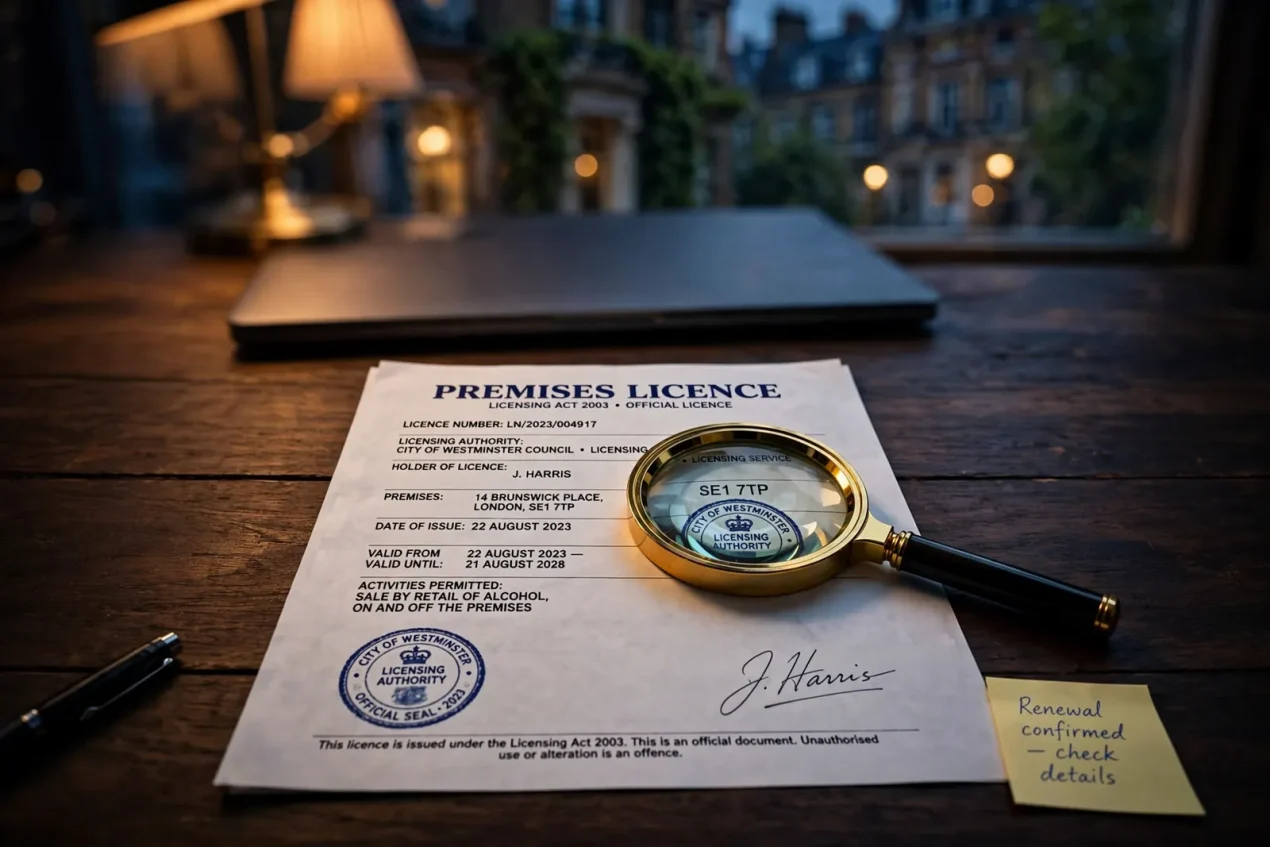
A Curacao gaming licence tells you that an operator claims to be licensed in that jurisdiction. It does not, by itself, show that the operator holds a UK Gambling Commission (UKGC) licence or is overseen by the UK regulator. Those are separate questions, and the distinction matters if you are assessing a site for use from Great Britain.
A licence issued in another jurisdiction cannot stand in for UKGC authorisation and does not grant an operator permission to serve customers in Great Britain.
A foreign licence is not a passport into the British market. Operators offering gambling to customers in Great Britain need the relevant UKGC licence, regardless of where they are based. So, when asking whether a Curacao casino is legal in the UK, separate the operator’s authority in its licensing jurisdiction from its authority to serve customers in Great Britain. A licence issued elsewhere cannot stand in for UKGC authorisation.
The wording on a site may also be less informative than it first appears. A reference to Curaçao eGaming or a Curacao casino licence does not, on its own, establish which company is responsible for the gambling service, what the licence covers, or what complaint process is available. Those details need to be assessed individually; the label alone cannot answer them. Nor do Curacao casino ratings settle the question of regulation: a favourable rating is not evidence of UKGC oversight.
Anjouan offers a useful comparison, but not a shortcut to conclusions about Curacao. Anjouan’s rules do not require licensed casinos to integrate GAMSTOP or provide an independent dispute-resolution service comparable to UKGC-approved services. Its framework also does not require random number generator testing, audits or the separation of player funds from company funds. These are specific features of Anjouan’s system. They should not be attributed to Curacao merely because both jurisdictions issue licences outside the UK.
An Anjouan casino licence also does not authorise an operator to serve the UK market or other restricted markets. That illustrates a basic limit of licensing: permission from one jurisdiction does not necessarily travel with the operator into another. The same principle is why seeing a foreign licence and seeing UKGC regulation should never be treated as interchangeable.
Merkur Casino Online UK: Games, Sites and Checks
For you, the practical point is to read a licence as one piece of information about an operator, not as a general assurance of protection. The jurisdiction named, the company behind the site and the regulator responsible all matter. A non-UK-regulated casino sits outside the UKGC system even if it displays a licence from elsewhere. That difference affects what oversight applies; it is not resolved by a rating or by the mere presence of a licence badge.
How to Read a Curacao Casino Licence List
A Curacao casino list can help you identify which jurisdiction a site says it operates under. It is not, by itself, proof that the named business holds a current licence, that the licence belongs to the company taking your money, or that the site is authorised to serve customers in Great Britain.
Start with the operator’s identity. A casino brand may differ from the legal company name shown in its terms and conditions. Look for the company that operates the site, then compare that name with the name attached to any licence claim. If a list gives only a brand, a badge or a licence reference without identifying the operator, it leaves an important gap. Similar names are not enough to establish that two records refer to the same business.
Next, check what the list actually says about the licence. Does it identify Curaçao as the licensing jurisdiction, or merely describe the site as “licensed”? Does it name the issuing authority and provide a reference that can be checked against the authority’s own information? A list that repeats an operator’s claim without showing where it came from is a lead to investigate, not independent confirmation. If the details conflict or cannot be matched, treat the claim as unverified rather than filling in the blanks yourself.
Do
- Compare the legal company name with the licence claim
- Check the issuing authority and reference number
- Verify the operator’s identity through official records
Don’t
- Rely on brand names alone to identify the operator
- Treat a “licensed” label without a reference as proof
- Assume a favourable review is a licensing record
Then separate the licence question from the UK authorisation question. Non-UK-regulated casinos operate without oversight from the UK Gambling Commission; sites of this kind may be licensed in jurisdictions including Curaçao, Malta, Gibraltar or Anjouan. A Curaçao listing therefore does not establish UKGC oversight. A list may accurately describe a casino’s claimed operating jurisdiction and still tell you nothing that proves it is authorised to serve the British market.
Reviews need the same care. A Curacao casino review may discuss the games, payments or customer service, but a favourable verdict is not a licensing record. Check whether the review identifies the operating company and explains how its licence claim was checked. If it does not, keep the review’s opinion separate from what you can verify. A long list of positive comments does not resolve a mismatch in company names.
Treat categories and filters cautiously, too. Labels such as “Curacao licensed casinos” can make a collection look definitive even when the entries have not been checked to the same standard. A filter for a particular payment option, including Paysafecard, answers a different question from who operates the site or which regulator oversees it. Similarly, “Curacao slot” may refer loosely to a game found on a casino site; it does not identify the casino’s licence or establish anything about the game’s oversight.
USA Casinos for UK Players: Licensing and Risks
So, is a Curacao casino safe? A list alone cannot answer that. Its useful role is narrower: it can point you towards a site’s claimed jurisdiction and give you details to verify. Before relying on an entry, compare the operator’s identity, the stated jurisdiction and any licence information across the list, the casino’s own terms and the relevant regulator’s published information. If the list does not make those checks possible, do not treat its inclusion as an endorsement or assurance.
Curacao-Licensed Sites and Crypto: Check the Terms Before You Deposit
A payment logo on a casino’s cashier page tells you what it may accept for a deposit; it does not establish that the site is authorised to serve customers in Great Britain. If you are considering a Curacao-licensed site, treat access and payment terms as separate checks. A foreign licence is not a UK Gambling Commission licence, and a payment option does not change that distinction.
Non-UK-regulated casinos may take credit cards, e-wallets, bank transfers or cryptocurrency, sometimes using payment processors other than the familiar UK providers. The available methods can differ by site and may depend on your account or location. Check the cashier and the terms before sending money, rather than assuming that a method mentioned in a review is still available.
Crypto needs particular care. Paying with cryptocurrency can bypass the UK ban on gambling funded by credit cards, but that describes the payment route, not the operator’s status or the protections attached to your account. A crypto option does not prove that a casino is properly licensed, nor does it make a deposit reversible through a card provider. Check which asset the site accepts, how it calculates the amount credited, and what its terms say about processing a withdrawal.
Payment Risks
Do not assume the deposit route will be available for cashing out; check the withdrawal section of the terms before depositing.
Most importantly, do not assume that the route used to deposit will be available for cashing out. A casino may set different rules for deposits and withdrawals, or require a different method for a payout. Before depositing, look for the withdrawal section of the terms: check which routes are permitted, whether identity checks apply, and whether there are limits or fees. If the rules are unclear, putting money in first leaves you to resolve the uncertainty later.
Timing claims also conflict. Some descriptions give withdrawals as fast as 24 hours to 5 business days, while other accounts say a payout can take three or four weeks. These are not compatible promises of a typical experience. For a non-UK-regulated casino, there is no UK regulatory clock to enforce a stated processing period, so read the operator’s terms and keep a record of any timing it gives you.
A specialist review has also reported that some offshore sites may let customers charge deposits to a mobile phone bill or use a prepaid balance. Treat that as a possibility reported about particular sites, not as a standard feature of Curacao casinos; confirm it directly with the operator before relying on it.
For any overseas gambling service, you are responsible for checking the laws that apply to you and understanding the implications of using it. Practical access to a cashier is not the same as assurance that a site is authorised for the UK market.
Casino Sites, Slots and the Cost of a Bonus
A casino’s games page may group slots by theme, provider or popularity, while a promotion is often presented separately as a welcome offer or free-spin package. The headline describes what you may receive; the terms determine what you can keep. On sites serving UK players from outside the UK regulatory system, do not assume that a familiar game or a large bonus means the offer works like one at a UK-licensed casino.
Malta MGA-licensed casinos in the UK: what applies
Book of Dead and Starburst are two recognisable slot titles you may encounter. The game itself is only part of the decision: check whether a promotion applies to the slot, and whether play on it counts fully towards any wagering requirement. A game can be available without qualifying in the way you expect.
A wagering requirement sets how much eligible play must take place before bonus-related funds or winnings can be withdrawn. A specialist review has reported offshore welcome offers with requirements of 35 times the bonus or more. The actual figure and calculation depend on the offer. A stated 40-times requirement, for instance, could apply to the bonus alone, the deposit and bonus together, or the bonus and free spins combined. Those calculations produce very different hurdles, so read the terms rather than judging by the multiplier alone.
Free spins also have conditions. A specialist review has reported packages that expire within 24 to 72 hours, with winnings subject to wagering of 30 to 50 times the winnings and cash-out caps of £5 to £50. These are reported examples, not a rule for every casino or promotion; check the offer currently displayed and its full terms. Expiry can leave little time to use spins, while a withdrawal cap may limit the amount you can take away even after completing the requirement.
The practical comparison is between the value advertised and the conditions attached. Look for which games count, how the wagering is calculated, when the offer expires, and whether a cap applies to winnings. If those details are hard to find or unclear, the bonus is difficult to assess—and declining it may be simpler than accepting conditions you cannot verify.
Bonus calculation examples
A 40-times wagering requirement could apply to the bonus alone, the deposit and bonus together, or the bonus and free spins combined, creating very different hurdles.
For play in Britain at a UK-licensed site, online slots must not offer autoplay, and each spin must last at least 2.5 seconds. Those rules are part of the UK framework; seeing a slot title on a site operating outside it does not establish that the same safeguards apply there.
Licensing Claims, Crypto and What Can Be Verified
A casino’s use of cryptocurrency and its licensing claim answer different questions. A crypto payment option tells you how the site says you can move funds; it does not establish who operates the casino, which authority has licensed that operator, or what standards apply. Equally, a licence claim does not show that the casino accepts cryptocurrency or explain how deposits and withdrawals work.
That distinction matters when assessing a Curacao-licensed crypto casino. Treat the two claims separately: check the licensing information against the relevant authority’s records, and read the casino’s own payment terms. A logo or licence number displayed on a website is a claim to verify, not proof that the payment arrangements or player protections are sound. Even a genuine licence only tells you something about the stated licensing framework; it cannot, by itself, settle every question about an operator’s conduct or the handling of your money.
The limits become clearer when you compare jurisdictions. Anjouan provides a specific example, but its rules should not be attributed to Curacao. Anjouan’s framework does not require casinos to arrange independent testing of random number generators, conduct audits, or keep player funds separate from operating funds. That does not establish that every Anjouan casino behaves identically; it does mean that the licence framework does not guarantee those safeguards.
The distinction over funds has practical consequences. Anjouan-licensed casinos do not guarantee that player money is segregated. If an operator fails, customers may be unsecured creditors rather than having a protected claim to funds held separately for them. The Anjouan authority also does not handle, mediate or decide player complaints, so a licence from that jurisdiction should not be mistaken for access to an authority-led remedy.
For any claimed licence, check that the named operator and the licensing information match, and consider what the regulator’s rules actually require. Do not infer audit practices, fund protection or complaint handling from the word “licensed” alone. And do not treat crypto acceptance as evidence of stronger privacy, safer custody or a more dependable withdrawal process. Those are separate matters, each requiring its own scrutiny.
GamStop Does Not Cover Every Offshore Site
GamStop is the UK Gambling Commission’s self-exclusion scheme. A person who registers with it asks participating gambling operators to prevent them from using their accounts. Casinos operating outside the UKGC system are not participants, so a GamStop exclusion does not automatically block access to them.
That distinction matters when you see a Curacao casino described as “not on GamStop”. The phrase means that the casino is outside the scheme; it does not mean that it has a separate arrangement that honours a GamStop exclusion. The same applies to other non-UK regulated casinos. A new site does not become covered simply because it has recently opened or because it accepts customers in Britain.
In practical terms, GamStop should not be treated as a universal barrier to online gambling. If you have self-excluded through the service, an overseas site may still be accessible. That gap is not evidence that the site is safer or suitable as an alternative. It means the exclusion you set up does not provide the same protection there.
Casinos operating outside the UKGC system are not participants in GamStop, meaning a self-exclusion registration does not automatically block access to them.
What the gap means for safeguards
UKGC-licensed operators are subject to requirements intended to protect customers, including mandatory responsible-gambling tools. At a non-UK regulated casino, you lose access to those protections as a matter of the UK scheme. A site may offer some controls of its own, but you should not assume that they are equivalent to the tools available through UK-regulated operators or that a GamStop registration will activate them.
Responsible-gambling measures can include ways to restrict or stop your own gambling. Without the UK system applying to the site, there is no reason to expect your existing exclusion to be recognised there. Nor should a label such as “Curacao casino exempt from GamStop” be read as an official exemption granted after an assessment of your circumstances. It describes the site’s position outside the scheme, not an extra safeguard.
The standards governing responsible gambling and the handling of personal data may also be less demanding than those imposed on UKGC-licensed operators. That can affect how much protection you can expect if you want to limit your activity or have concerns about how your information is used. The precise policies may differ from one operator to another, but the UKGC’s oversight and its requirements do not follow you to a site outside its system.
Help and complaints are not the same
Using a non-UK regulated casino also changes where you can turn if something goes wrong. Players at offshore casinos do not have access to the UK’s Financial Ombudsman Service in relation to that gambling activity, and the UK’s mandatory responsible-gambling tools do not apply there. This is a practical loss, not merely a difference in terminology.
It is therefore important not to confuse an account’s own customer-support process with the independent protections available in the UK system. A site may describe its internal procedures, but that does not make it part of GamStop or give you access to the UK’s Financial Ombudsman Service. If you rely on self-exclusion to control gambling, an operator’s own account settings are not a substitute for assuming that the exclusion will work across every site.
This distinction is especially relevant if you are looking at Curacao online casinos without GamStop after registering with the scheme. A successful sign-up or an available account does not show that your exclusion has been lifted or that the site has checked whether you should be able to gamble. The scheme simply does not cover that casino.
If you have chosen to exclude yourself, treat that choice as a reason to avoid sites outside the scheme too, rather than as a restriction that applies only where it is automatically enforced. Do not rely on a casino’s location, branding or claims about its licence to extend GamStop’s reach. A Curacao casino outside GamStop remains outside the UK scheme, and any controls it offers are not the same thing as a UKGC requirement.
The important point is not whether a site calls itself “not on GamStop”, but what that leaves you without: the exclusion will not block it, UK-mandated responsible-gambling protections do not apply in the same way, and the Financial Ombudsman route is unavailable. An offshore site should not be treated as a workaround that preserves the protections you sought by self-excluding.
Practical Limitations
- GamStop exclusions do not automatically block access to offshore sites
- UK-mandated responsible-gambling protections do not apply
- The Financial Ombudsman route is unavailable for non-UK regulated casinos
Skrill, Neteller and Trustly: Deposits Are Not the Whole Story
Skrill, Neteller and Trustly are names you may encounter when comparing payment options, but their presence in a search or on a payment page does not establish that a particular casino accepts them. Offshore operators may take e-wallets, bank transfers and cards, sometimes through alternative processors. Availability can depend on the operator, the processor and your account, so check the cashier’s current options before you deposit.
A deposit route is not a promise of a matching withdrawal route. The site may require you to cash out by another method, or apply different processing steps to withdrawals. Read the payment terms as well as the deposit screen, including any conditions on identity checks and how a withdrawal request is handled. If the route you intend to use is not clearly available for cashing out, do not assume the money can be returned through it.
Published accounts of withdrawal timing differ. Some describe withdrawals at non-GamStop casinos as taking from 24 hours to 5 business days, depending on the payment method; other accounts warn that payments at non-UK-regulated casinos can take as long as three or four weeks. There is no single timing that applies to every operator or payment route, and the disagreement itself is a reason to treat a stated estimate cautiously.
The time shown for processing is only part of the picture. A specialist review may report that a particular non-UK-regulated casino sets daily, weekly or monthly withdrawal limits. Where such a cap applies, a larger win may have to be paid out in instalments rather than in one transfer. Check whether the terms state a limit, when it applies and whether it affects the method you plan to use.
Before depositing, save or note the payment and withdrawal rules as they appear at that time. Confirm which methods are available for both directions, whether the operator uses a processor you recognise, and what conditions can delay or divide a payout. A familiar e-wallet name does not settle those questions; the terms attached to the specific account and transaction do.
Non-UK Licence Casinos: What the Licence Means
Are Curacao Casinos Legit, Safe or Regulated?
A Curacao licence may indicate that an operator claims oversight in that jurisdiction, but it does not make the site regulated by the UK Gambling Commission. For customers in Great Britain, that distinction matters: a foreign licence is not a substitute for the UK licence required to serve the British market.
“Legit” can mean different things. A site may be operating under a claimed foreign licence, yet still lack the protections that come with UKGC oversight. The licence label alone does not establish that a particular operator will handle your money fairly, resolve a dispute or pay a withdrawal promptly. Check who operates the site and what its terms say; do not treat the word “licensed” as a guarantee of safety.
If a payment or account dispute arises, you should not expect access to the UK Gambling Commission’s complaints process or the UK’s Financial Ombudsman Service for a non-UK-regulated casino. Complaint arrangements depend on the jurisdiction and operator. As a jurisdiction-specific example, Anjouan-licensed casinos do not offer an independent dispute route comparable to UKGC-approved alternative dispute resolution. That should not be assumed to describe every Curacao-licensed operator, but it illustrates why the licence’s practical protections need checking.
Withdrawal problems are another risk to consider. A site may delay or freeze a withdrawal while asking for further identity checks. Some specialist reviews report requests for notarised documents or video calls; these are not a standard requirement you should assume applies everywhere, but they show why the verification terms deserve attention before you deposit. Keep copies of the terms and your communications if a dispute develops.
Using an unlicensed gambling site is not a criminal offence for an individual player under UK law. That does not make the site UK-regulated or remove the practical risks. Before using one, decide whether you can accept having fewer routes to challenge a decision and potentially more difficulty getting money released. A licence claim is a starting point for scrutiny, not a safety verdict.
Are non-UK-regulated casinos legal for UK players to use?
Yes, you do not commit a criminal offence by gambling with an overseas-licensed site. However, operators serving customers in Great Britain need a UK Gambling Commission licence; a foreign licence does not replace it.
Are sites that are not on GamStop legal for players in the UK to access?
Yes, UK law does not explicitly prohibit you from using an overseas gambling service, and players do not commit a criminal offence by gambling on an unlicensed site. Casinos outside the UKGC system are not part of GamStop.
Can I complain to the Anjouan regulator if a casino won’t pay me?
No. The Anjouan authority does not handle or decide player complaints, and Anjouan-licensed casinos do not provide an independent dispute-resolution route comparable to UKGC-approved ADR.
Is it legal for a UK player to gamble at an Anjouan-licensed casino?
You do not commit a criminal offence under UK law by gambling with an overseas-licensed casino. But an Anjouan licence does not authorise the operator to serve customers in Great Britain; operators serving that market need a UK Gambling Commission licence.
This material was created by the Spreadex Casino UK team.
Related posts

Top Rated Online Casinos UK: What Ratings Mean

Wazdan Online Casinos UK: What Can Be Verified